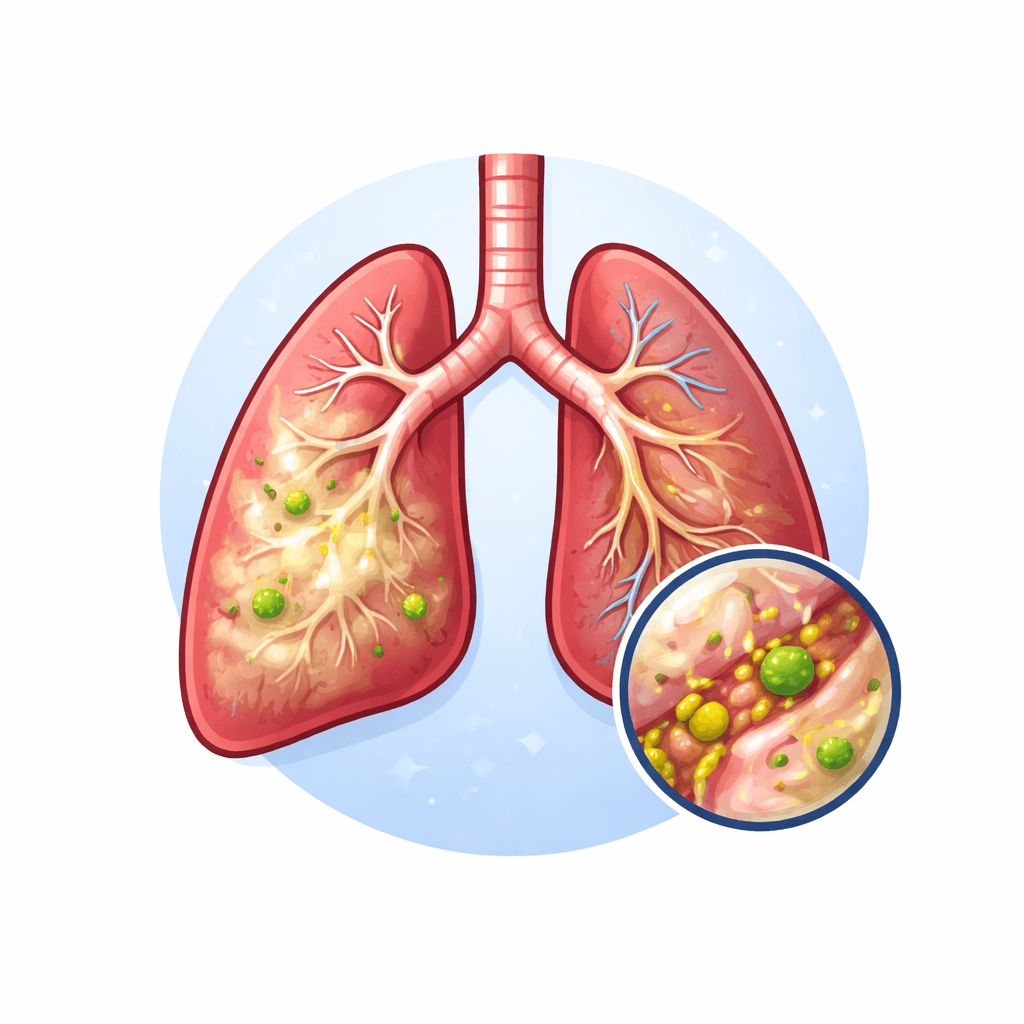
Pneumonia is a lung infection caused by bacteria, viruses, or, more rarely, fungi. Microorganisms reach the alveoli — the small air sacs where oxygen exchange occurs — and cause inflammation that impairs oxygen transfer to the blood. It can affect people of any age, but is more serious in young children, the elderly, and people with chronic diseases or weakened immunity.
Most common symptoms
- Fever, usually high
- Cough with or without phlegm
- Shortness of breath
- Chest pain when breathing or coughing
- Fatigue and general malaise
- Chills
- Mental confusion in the elderly
Symptom intensity ranges from mild illness to severe situations requiring hospitalization.
Aspiration pneumonia
A specific type is aspiration pneumonia, which occurs when content from the mouth, stomach, or food is inhaled into the lungs. It is more common in people with swallowing difficulties, neurological disorders, or significant gastroesophageal reflux.
How diagnosis is made
Chest X-ray — identifies areas of lung inflammation
Chest CT scan in specific situations
Blood tests to evaluate signs of infection
Sputum culture to identify the responsible microorganism
Treatment
Treatment depends on the cause and severity of the illness.
- Antibiotics for bacterial pneumonia
- Supportive care and symptom control for viral pneumonia
- Adequate hydration
- Supplemental oxygen when necessary
- Hospitalization in more severe cases
Prevention is also essential — vaccination against pneumococcus and influenza significantly reduces pneumonia risk in vulnerable groups. Early diagnosis and correct treatment favor complete recovery and prevent complications.