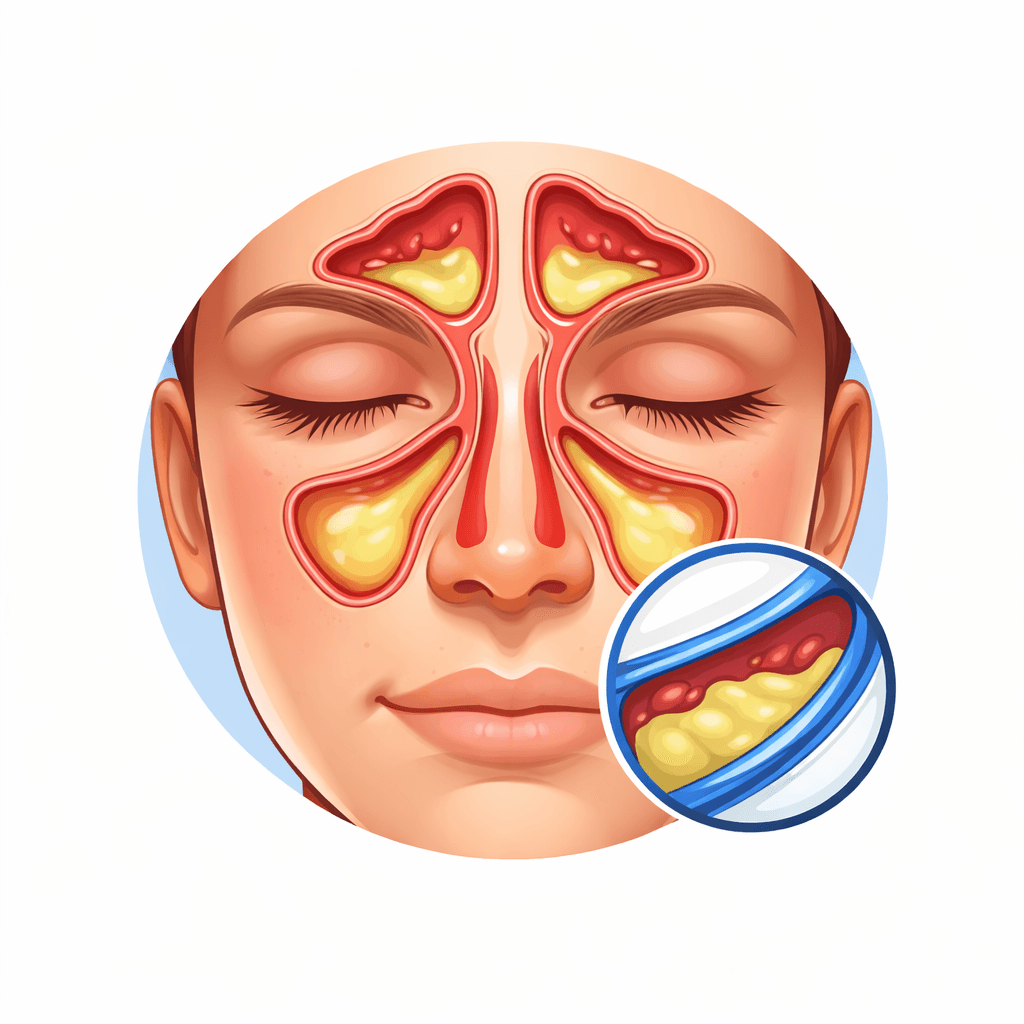
The nose, sinuses, and lungs are part of the same continuous respiratory system — the so-called unified airway. Problems in the upper airways, such as rhinitis and sinusitis, directly influence lung health and can contribute to poor control of diseases like asthma. Treating the nose is an essential part of complete respiratory care.
Allergic rhinitis
Allergic rhinitis is inflammation of the nasal mucosa caused by an exaggerated immune system reaction to environmental substances — allergens.
- Dust mites
- Pet hair and dander
- Mold and fungi
- Dust and airborne particles
- Pollen in some regions
Symptoms include frequent sneezing, runny nose, nasal congestion, and itching in the nose and eyes.
Chronic sinusitis
Chronic sinusitis (chronic rhinosinusitis) is persistent inflammation of the sinuses lasting more than 12 weeks. The main symptoms are:
- Continuous nasal congestion
- Thick nasal discharge
- Pressure or heaviness sensation in the face
- Headache
- Reduced or lost sense of smell
- Cough and sensation of mucus dripping down the throat
Relationship with asthma
Rhinitis and asthma frequently coexist. Untreated nasal inflammation can worsen cough, increase asthma episodes, and make respiratory disease harder to control. This is why treating the upper airways is an integral part of asthma management.
Diagnosis and treatment
Diagnosis is based on clinical evaluation, patient history, and when needed, complementary tests such as sinus CT and allergy testing.
- Nasal corticosteroids to reduce inflammation
- Antiallergic medications — antihistamines
- Saline nasal rinses
- Allergen exposure control
- Allergen immunotherapy in selected cases
With proper treatment, it is possible to control symptoms, improve sleep quality, breathing, and the management of associated respiratory diseases.