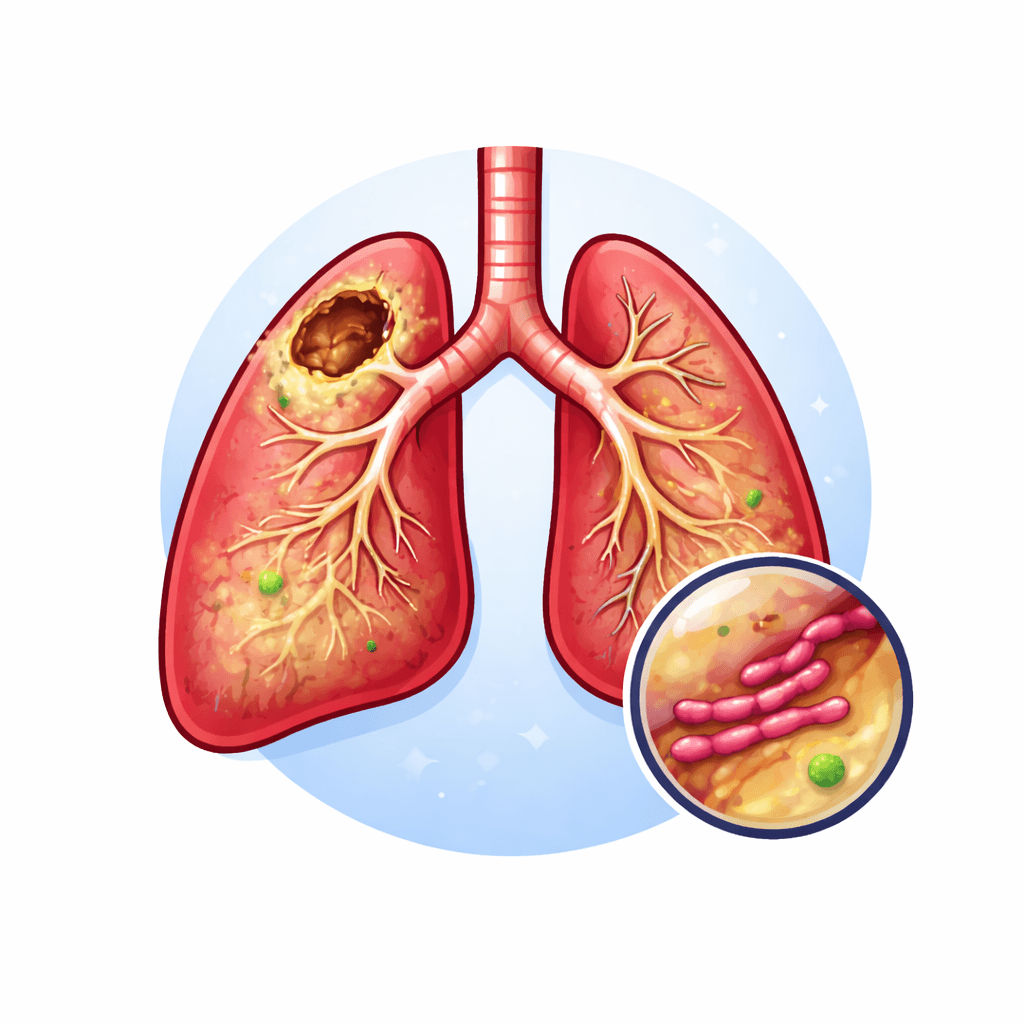
Tuberculosis is an infectious disease caused by the bacterium Mycobacterium tuberculosis, transmitted through the air when a person with active pulmonary disease coughs, speaks, or sneezes. Despite being known for centuries, it remains a significant public health problem. The good news: tuberculosis has treatment and can be cured when correctly diagnosed.
Main symptoms
- Persistent cough for three weeks or more
- Mucus production, sometimes with blood
- Fever, usually in the afternoon or evening
- Intense night sweats
- Unexplained weight loss
- Fatigue and weakness
- Loss of appetite
Symptoms develop gradually, which can delay seeking medical evaluation.
Transmission
The bacterium spreads through the air in microscopic particles. Prolonged contact in closed, poorly ventilated environments facilitates transmission. Importantly: not everyone exposed develops the disease — the immune system controls infection in most cases. When defenses are compromised, however, the bacterium can multiply and cause active disease.
How diagnosis is made
Sputum examination — detects the presence of the bacterium
Rapid molecular test — detects the bacillus genetic material with high precision
Chest X-ray — identifies characteristic pulmonary changes
Additional tests as needed for extrapulmonary forms
Treatment
Tuberculosis is treated with a combination of specific antibiotics for at least 6 months. Treatment must be followed rigorously and completely, even when symptoms improve in the first weeks — stopping early promotes bacterial resistance and disease relapse.
- Combined antibiotics for the physician-recommended period
- Regular medical monitoring throughout treatment
- Notification and contact tracing for close contacts
With proper treatment, tuberculosis is curable. Early diagnosis protects the patient and significantly reduces transmission risk to others.