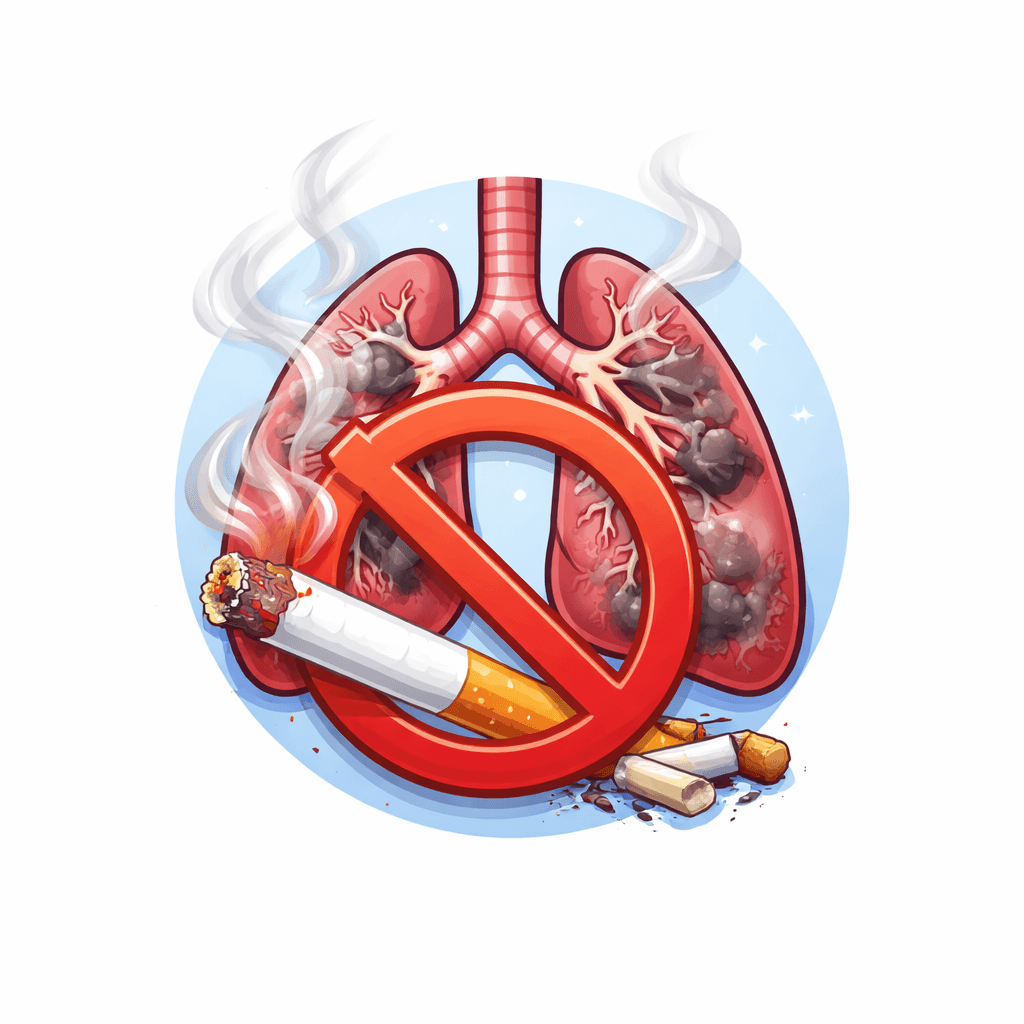
Tobacco use is the leading preventable cause of disease and death worldwide. Cigarettes contain more than 4,000 chemicals — many toxic and carcinogenic — that cause progressive harm to the body, especially the lungs, heart, and blood vessels. The good news is that quitting smoking brings health benefits at any point, regardless of how long a person has smoked.
Diseases caused by smoking
- COPD — chronic obstructive pulmonary disease
- Lung cancer
- Cancers of the mouth, larynx, esophagus, and other organs
- Heart attack and stroke
- Worsened asthma control
- More frequent respiratory infections
- Overall cardiovascular health deterioration
Nicotine dependence
Nicotine directly acts on brain reward circuits, creating physical and psychological dependence. When trying to quit, withdrawal symptoms may emerge — anxiety, irritability, difficulty concentrating, and strong cravings. These symptoms are temporary and can be treated with proper medical support.
Lung cancer screening
For current or former smokers with a significant smoking history aged over 50, low-dose chest CT screening may be indicated — capable of detecting lung abnormalities in early stages before symptoms appear, when treatment is most effective.
How to quit smoking with support
- Specialized medical follow-up for guidance and support
Nicotine replacement therapy — patches, gums, lozenges
- Medications that reduce cravings and withdrawal symptoms
- Behavioral strategies to identify and manage triggers
Electronic cigarettes (vapes) are not a safe alternative — they contain harmful substances and high concentrations of nicotine, potentially causing dependence and lung injury.
Benefits of quitting
Improvements begin hours after the last cigarette and accumulate over time: better breathing, lower cardiovascular risk, reduced cancer risk, and more energy. With the right support, quitting smoking is achievable — and transformative.